Sleeve Surgery Risks and Complications (A Review of Short- and Long-Term Risks)

effects. Fortunately, most of these are minor, temporary, and manageable, and should not cause major concern. If the surgery is performed by an experienced surgeon and the patient follows all instructions carefully, even these minor complications are minimized. However, entrusting the procedure to an inexperienced or unqualified surgeon may increase the risk of both typical and serious complications.
In this article, we will explore sleeve surgery risks and complications, from minor to the most serious
Sleeve Surgery Risks at a Glance
| Category | Type of Complication | Description | Prevention/Treatment |
|---|---|---|---|
| Common Short-Term | Nausea, Vomiting | Often due to general anesthesia | Prescription medications, rest |
| Mild Fever | Normal body response after surgery | Medical monitoring, hydration | |
| Incision Pain | Normal after surgery | Prescribed painkillers | |
| Hair Loss (Temporary) | Caused by rapid weight loss and nutrient deficiencies | Supplements, adequate protein intake | |
| Surgery-Related | Staple Line Leak | Dangerous; requires immediate attention | Experienced surgeon, close post-op monitoring |
| Bleeding from Staple Line | Occurs in <1% of cases | May require revision surgery | |
| Hiatal Hernia | Part of the stomach moves into the chest | Often improves with weight loss | |
| Long-Term | Malnutrition | Reduced absorption of vitamins and minerals | Regular supplements as prescribed |
| Skin Sagging | Caused by rapid and significant weight loss | Exercise, cosmetic surgery (e.g., abdominoplasty) | |
| Very Rare | Death | <0.3% | Experienced surgeon and equipped center, follow instructions |
Every Surgery Has Potential Complications
Before discussing the specific risks of sleeve surgery, it’s important to note that all surgeries, from minimally invasive to highly complex procedures, carry potential complications.
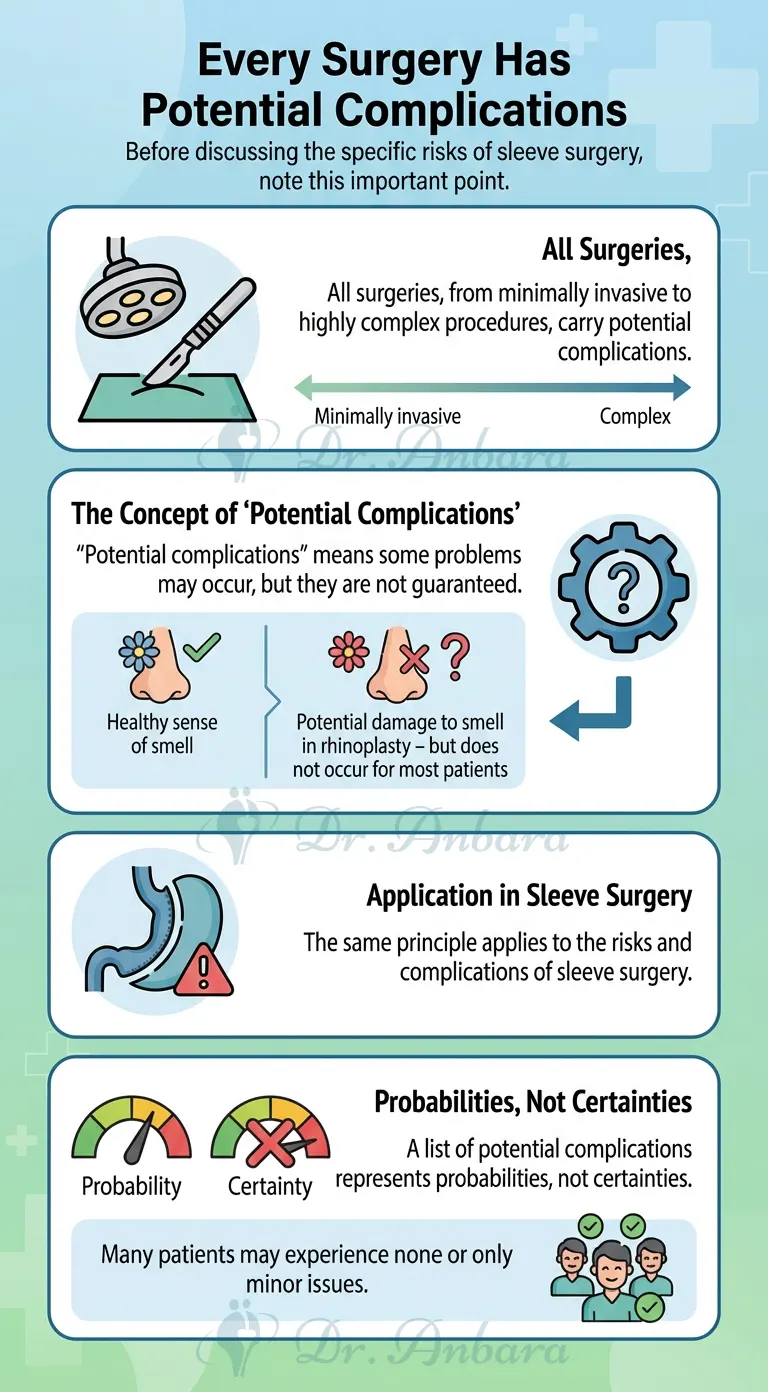
“Potential complications” means that some problems may occur, but they are not guaranteed. For example, a possible complication of rhinoplasty is damage to olfactory sensors—but most patients do not experience this.
The same principle applies to sleeve surgery risks and complications. When a list of potential complications is given, it represents probabilities, not certainties. Many patients may experience none or only minor issues.
How to Minimize Sleeve Surgery Complications
If you approach surgery fully prepared:
- Adopt a healthier lifestyle before surgery
- Follow all pre- and post-operative instructions
- Choose an experienced surgeon in a fully equipped hospital
Following your surgeon’s recovery guidelines significantly reduces the likelihood of complications.
Global and Local Statistics of Sleeve Surgery Complications
The global complication rate for sleeve gastrectomy is approximately 10%, with mortality less than 0.3%. That means roughly 10% of patients may experience minor to moderate complications, while fewer than half a percent face life-threatening issues.
For reference, Dr. Taha Anbara has performed over 15,000 bariatric surgeries with very low complication rates.

Common Sleeve Surgery Risks
Typical complications that are considered normal and usually resolve quickly include:
- Anesthesia-related issues: nausea, vomiting, dizziness, headache
- Fever
- Infection (controlled with medication)
- Pain (managed with analgesics)
- Loss of appetite
- Hair loss (temporary)
- Reduced absorption of certain nutrients (managed with supplements)
Risks When Choosing an Inexperienced Surgeon or Ignoring Guidelines
Some complications may arise due to poor surgical technique or low-quality materials:
Staple Line Leak
After removing part of the stomach, the remaining portion is stapled. Improper technique or substandard staples may cause leaks, leading to peritonitis, infection, or abscess. Immediate medical attention is critical.

Staple Line Bleeding
A rare complication (<1%), sometimes controlled non-surgically. In some cases, a minor laparoscopic revision may be required to remove accumulated blood.
Hiatal Hernia
Occurs when part of the stomach slides into the chest. Common in obese patients, often diagnosed with endoscopy. Weight loss usually improves symptoms like heartburn or reflux.
Skin Sagging
Significant rapid weight loss may cause loose skin. Factors affecting this include age, exercise, weight loss speed, and skin elasticity. Cosmetic surgery (e.g., abdominoplasty) can correct this.

How to Prevent Sleeve Surgery Complications
1. Follow Your Post-Operative Diet
The post-sleeve diet progresses in stages: clear liquids → pureed foods → soft foods → solid foods. Consult a nutritionist or use apps like Sira to ensure a proper diet.
2. Protect Your Incisions
- Avoid showers for the first 48 hours
- Avoid bathtubs, pools, or jacuzzis for 4 weeks
Neglecting incision care may lead to infection, bleeding, or poor scarring.
3. Maintain a Healthy Lifestyle
- Gradually increase physical activity (even 10 minutes walking daily)
- Exercise regularly
- Eat healthy foods
- Avoid smoking and alcohol
These measures collectively reduce the risk of sleeve surgery risks and complications.

Frequently Asked Questions About Sleeve Surgery Risks
Generally, more invasive procedures carry higher risks. Gastric bypass is slightly more invasive than sleeve, so complications are more common.
Minor complications like nausea or fatigue are inevitable. However, serious risks such as staple line leaks can be minimized with an experienced surgeon.
No, it is usually temporary and resolves with proper protein and supplement intake.
Choosing a skilled surgeon is the most important preventive measure.
No. Regular exercise and gradual weight loss can minimize skin laxity.