Everything You Need to Know About the Mini Gastric Bypass
Most people are familiar only with gastric bypass and gastric sleeve procedures, and they often have little information about other laparoscopic weight-loss surgeries. One of these lesser-known procedures is the mini gastric bypass, which is recommended for certain patients based on their condition. In this article, we aim to explain everything you need to know about this weight-loss surgery in simple, easy-to-understand language.
Comprehensive Mini Gastric Bypass Overview (At a Glance)
| Topic | Description |
|---|---|
| Definition | A simplified version of the classic gastric bypass, involving the creation of a small stomach pouch connected directly to the intestine |
| Mechanism | Reduced food capacity, lower calorie absorption, hormonal changes affecting hunger |
| Ideal Candidates | BMI 30–35 with comorbidities, BMI 35–40, patients who failed non-surgical methods |
| Advantages | 60–80% excess weight loss, rapid diabetes improvement, shorter recovery, fewer complications than classic bypass |
| Disadvantages | Need for supplements, risk of reflux, more dietary restrictions than sleeve |
| Surgery Steps | 1. General anesthesia |
- 4–5 small laparoscopic incisions
- Stomach pouch creation
- Single connection to intestine |
| Recovery | Discharge after 1 night, return to work in 1 week, full activity after 3 weeks |
| Diet Plan | Week 1–2: liquids
Week 3–4: pureed foods
Week 5–6: soft foods
After 6 weeks: regular diet with restrictions |
| Possible Side Effects | Bleeding, infection, blood clots, reflux, vitamin deficiencies |
| Cost | 120–180 million IRR depending on surgical center and surgeon’s expertise |
| Long-term Results | Maintaining 50–60% weight loss at 5 years, 80% improvement in type 2 diabetes, better quality of life |
What Is Mini Gastric Bypass Surgery?
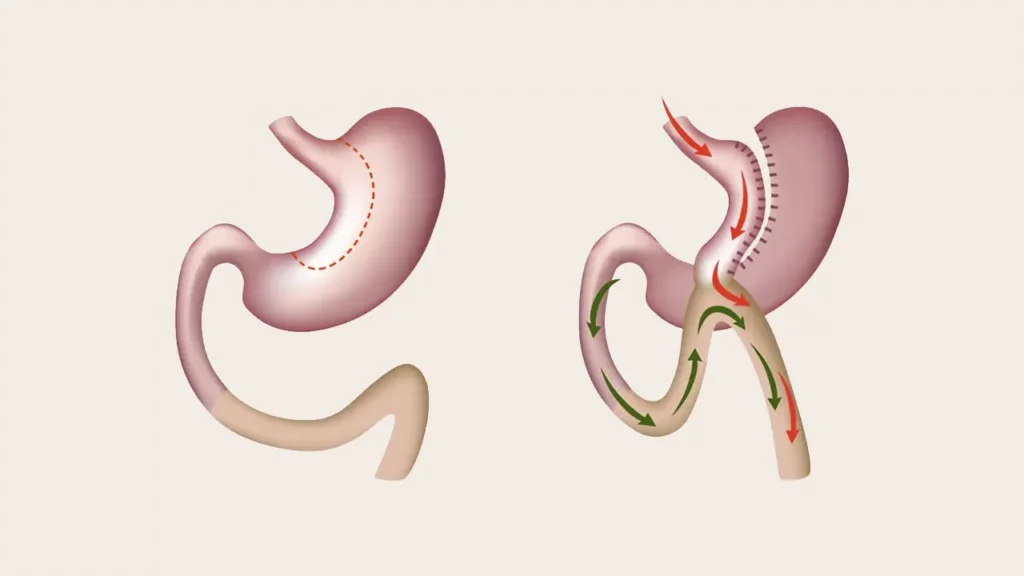
The mini gastric bypass is a type of weight-loss surgery that combines features of both gastric sleeve and traditional gastric bypass. It is slightly more invasive than the sleeve but safer and less invasive than the classic bypass.
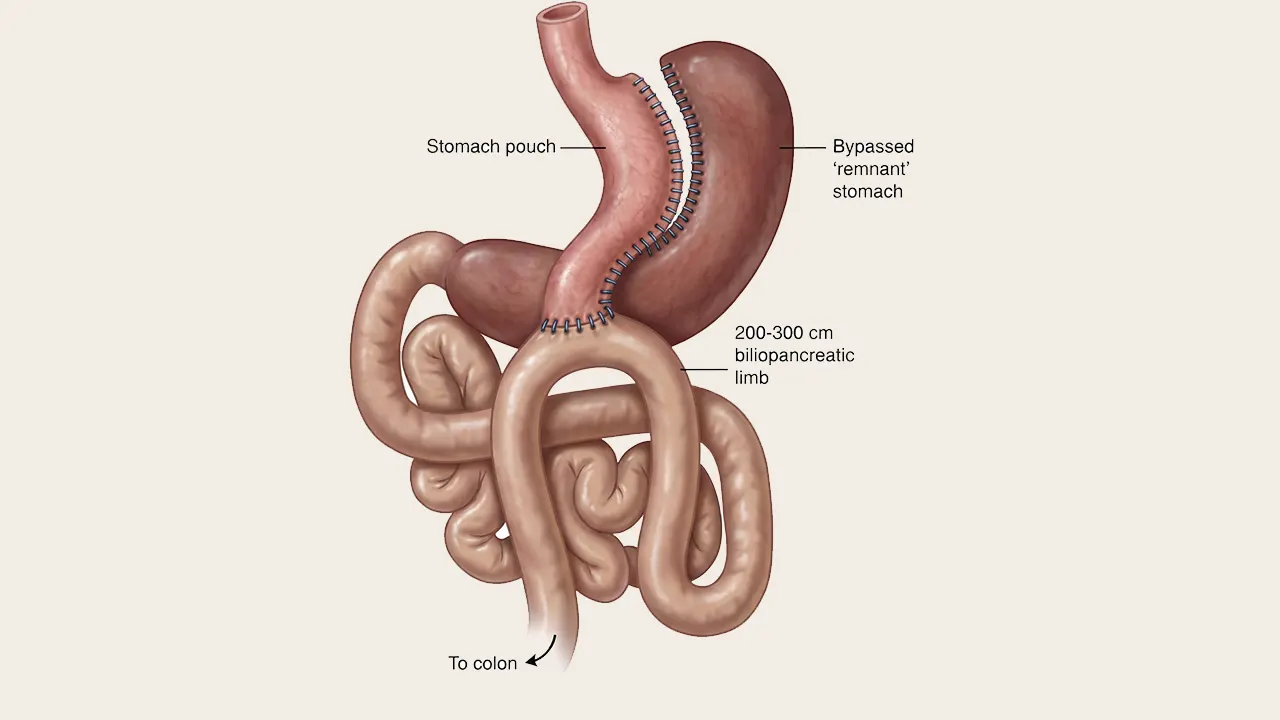
Similar to the traditional bypass, the stomach is divided into a small pouch and a larger excluded section. However, unlike the sleeve, no part of the stomach is removed. Instead, the small pouch is elongated, resembling the shape created in a sleeve.
Unlike the standard bypass, the mini gastric bypass connects the stomach pouch to the small intestine using only one anastomosis (connection point). For this reason, it is also known as single-anastomosis bypass. Reducing stomach volume and slowing pouch emptying helps patients feel full for longer.
Is Mini Gastric Bypass Reversible?
Yes. One of the most significant advantages of the mini gastric bypass is that it is reversible. If a patient is unhappy with the results or faces complications, the entire procedure can be reversed.
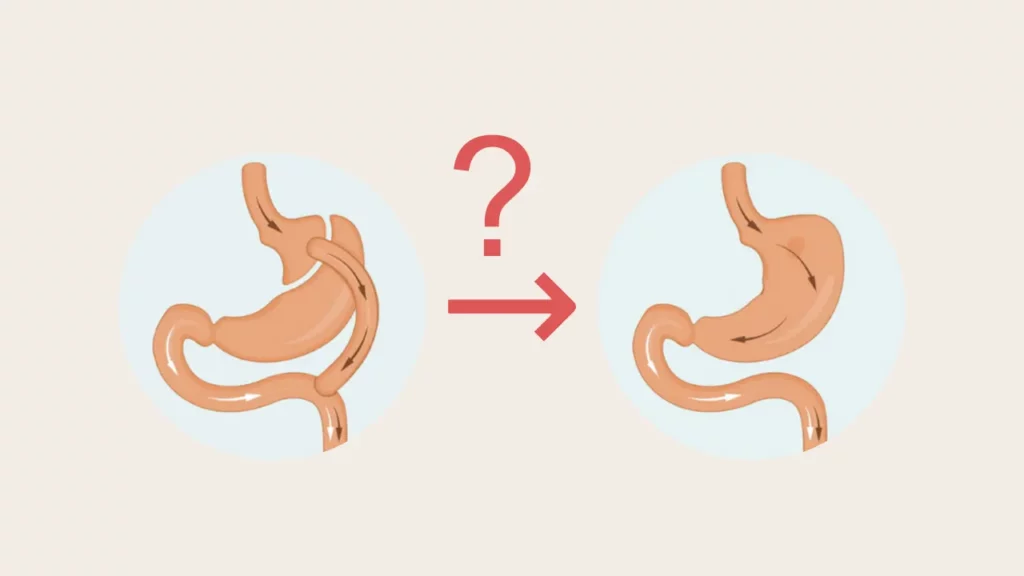
Unlike the sleeve, the bypassed portion of the stomach remains inside the body and still produces digestive enzymes. The mid-portion of the small intestine (around 1.5 meters from the start) is connected to the new stomach pouch. If needed, these changes can be undone, returning the anatomy to its original state.
Mini Gastric Bypass vs. Classic Gastric Bypass
The main difference lies in the number of anastomoses:
- Mini gastric bypass: 1 anastomosis
- Classic gastric bypass: 2 anastomoses
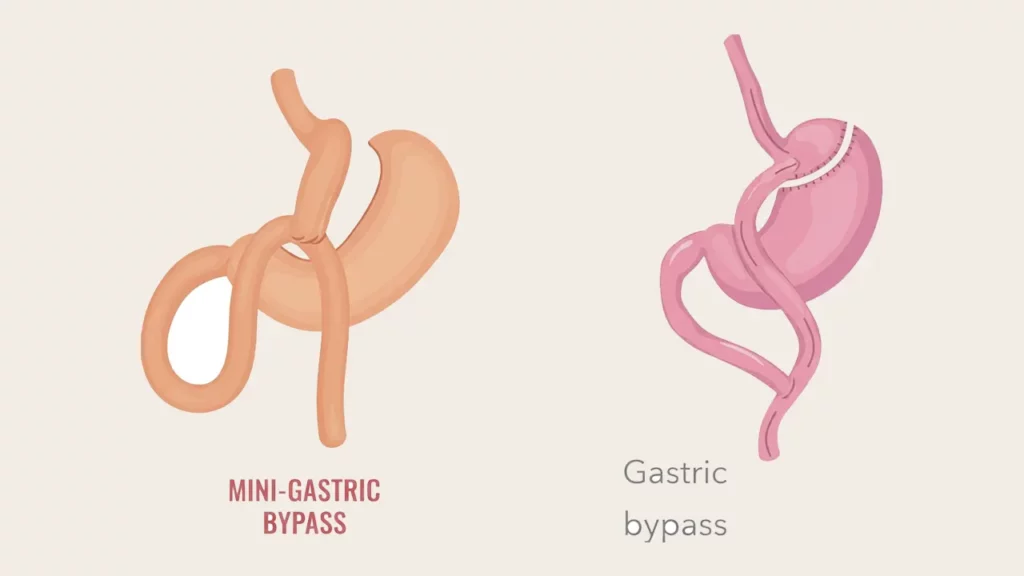
Because of this, the mini gastric bypass is technically simpler, faster, and associated with fewer surgical risks. Patients with severe obesity often benefit more from the mini gastric bypass because it offers greater malabsorption, leading to more effective weight loss. Additionally, the pouch created in mini bypass is larger, reducing the risk of complications.
How Much Weight Loss Can You Expect with Mini Gastric Bypass?
Patients typically lose weight rapidly after the mini gastric bypass and maintain most of their results.
- After 3 months: About one-third of excess weight
- After 1 year: Two-thirds to three-quarters of excess weight
Most patients reach their maximum weight loss between one and two years after the procedure. Though slight weight regain is common afterward, long-term results remain impressive—on average, patients lose 70% of their excess weight and maintain it for up to 10 years.
These numbers represent averages. Patients who follow proper dietary guidelines, exercise regularly, and adhere to medical instructions can achieve even better results.
Benefits of Mini Gastric Bypass Surgery
The mini gastric bypass offers several notable advantages:
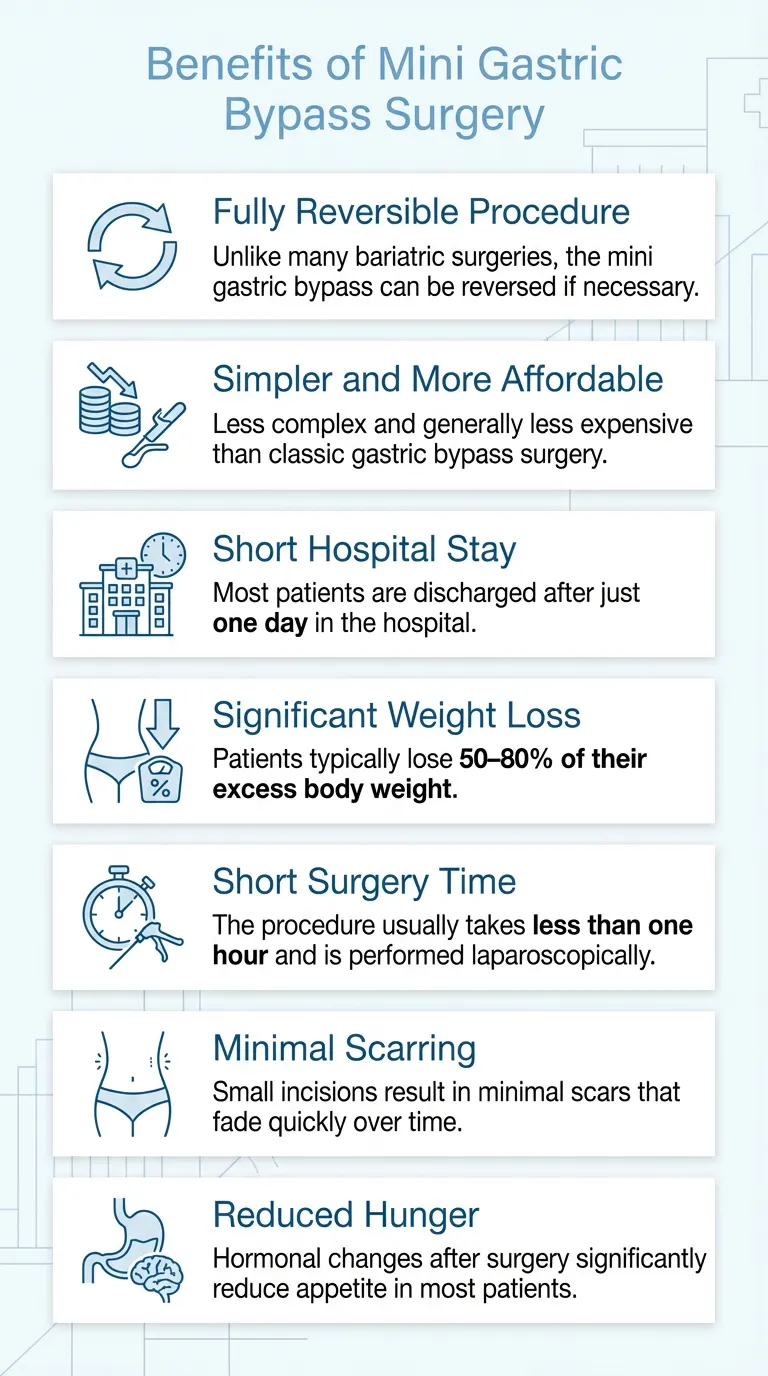
- It is fully reversible, unlike many other bariatric procedures.
- It is less complex and less expensive compared to the classic gastric bypass.
- The hospital stay is usually only one day.
- Patients typically lose 50–80% of their excess weight.
- The procedure takes less than one hour and is performed laparoscopically.
- Scars are minimal and fade quickly.
- Most patients experience a significant reduction in hunger due to hormonal changes.
Disadvantages of Mini Gastric Bypass
Despite its benefits, this procedure also has some drawbacks:
- Bile reflux into the stomach—and possibly the esophagus—can occur, potentially causing chronic irritation.
- Due to this issue, the mini gastric bypass is not formally approved in the United States.
- Malabsorption can lead to iron deficiency, anemia, and diarrhea in some patients.
Frequently Asked Questions About Mini Gastric Bypass
Yes, despite some claims otherwise, the mini gastric bypass can be reversed because no part of the stomach is removed.
Yes, but doctors recommend waiting 12–18 months until your weight stabilizes to minimize potential risks.
Yes. Some medications may not be absorbed as effectively after the mini gastric bypass, and dosage adjustments may be required. Always consult your doctor for medication management.